
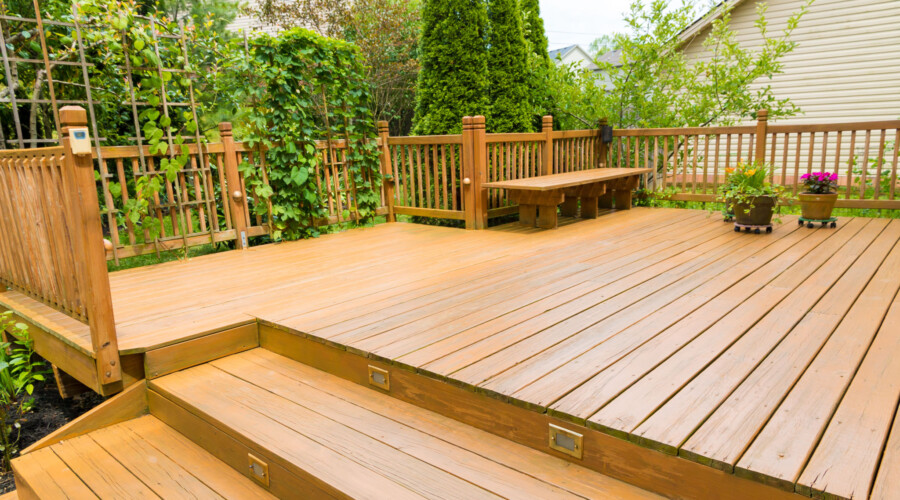
Understanding Maintenance for Various Deck Materials
Decks endure the brunt of nature’s elements; understanding how to maintain the various materials they’re made from is not just prudent, it’s essential for longevity. This article will guide homeowners through the nuances of caring for wood decks, the specifics of composite deck upkeep, and the low-maintenance advantages of PVC decks.
Homeowners will learn how to protect their investments and extend the life of their outdoor living spaces. Addressing common concerns such as weather damage and wear, the content provides practical solutions for preserving the integrity of beams, joists, screws, and the deck’s surface. With these insights, homeowners can ensure their deck remains a sturdy and inviting extension of their home.
How to Care for Wood Decks?

Wood decks require consistent care to maintain their aesthetic appeal and structural integrity. Regular cleaning is essential to prevent the accumulation of dirt and debris, which can lead to deterioration.
Protecting the wood with appropriate sealants ensures longevity, safeguarding against moisture and weather-related damage. Homeowners must also be vigilant in checking for issues such as loose screws, impaired drainage, or cracks in the surrounding concrete, as these can compromise the deck’s safety and functionality. This section will guide readers through the necessary steps to keep their wooden deck space in prime condition.
Clean regularly
Regular cleaning is a cornerstone of wood deck maintenance, ensuring the longevity and beauty of the construction. Homeowners should remove outdoor furniture and other items from the deck to sweep away leaves, dirt, and debris. This prevents the buildup of materials that can trap moisture against the wood floor, leading to decay and damage over time.
Wood decks typically need to be cleaned and sealed every one to two years to protect them from rain, snow, and harmful UV rays. The process of cleaning and sealing a wood deck can often be completed in a single weekend, making it an achievable DIY project for many homeowners.
Following the initial sweep, a deeper clean is advisable at least twice a year to preserve the wood’s integrity. The process involves a gentle scrub with a soft-bristle brush and a cleaner suitable for the wood type, taking care not to damage the stairs or elevate the grain. After cleaning, one should rinse the surface thoroughly to remove any residual cleaning agent:
- Remove all furniture and items from the deck.
- Sweep the deck to clear loose debris.
- Apply a wood-appropriate cleaner and scrub gently.
- Rinse the deck thoroughly to eliminate any leftover cleaner.
Protect the wood
A high-quality sealant not only enhances the deck’s resistance to water damage but also helps prevent the wood from cracking or warping. Homeowners should select a sealant that offers UV protection to keep the deck’s color from fading. The application of waterproofing sealant should be performed during a period of dry weather to ensure proper adhesion and effectiveness.
For decks that are frequently used as extensions of the living space, such as outdoor kitchens or dining areas, the choice of sealant can also impact the deck’s safety and accessibility. A non-slip sealant is advisable for areas near pools or hot tubs, and for surfaces that may become slick when wet, such as stairs or ramps. This consideration not only preserves the wood but also enhances the safety of all who enjoy the outdoor space.
For home owners in Raleigh, North Carolina, it’s worth noting that the city experiences an average of 213 sunny days per year . This high number of sunny days underscores the importance of using UV-resistant sealants to protect wooden decks from sun damage and color fading, especially in areas where pets may spend a lot of time outdoors.
Check for issues
Homeowners should routinely examine the deck for signs of wear, such as splintering wood or loose boards, which could indicate structural concerns. It is also wise to check for any protruding nails or screws that may have shifted due to changes in temperature or humidity. These small issues, if not addressed promptly, can lead to more significant problems, such as compromised safety or further damage to the deck’s structure.
Seasonal challenges also play a role in deck maintenance. For instance, after a heavy snowfall, it is important to remove the snow to alleviate excess weight and moisture retention. Similarly, ensuring proper drainage away from the deck can prevent water pooling, which is detrimental to the wood.
Homeowners should also consider the impact of nearby plumbing, as leaks can lead to wood rot. Regularly applying a fresh coat of paint can act as an additional protective layer against the elements. The following table outlines key maintenance tasks and the tools or actions required:
| Maintenance Task | Tool/Action Required |
|---|---|
| Inspect for loose nails or screws | Hammer or screwdriver |
| Remove snow from the deck surface | Snow shovel or brush |
| Check for proper drainage | Visual inspection and adjustment |
| Apply protective paint | Paintbrush or roller, appropriate paint |
| Monitor for plumbing leaks | Regular checks, plumber’s assistance if needed |
Furthermore, homeowners should not overlook the importance of having the right tools on hand. A well-equipped tool kit, including items such as a hammer, screwdriver, and paintbrush, can empower them to address minor issues swiftly.
For larger or more complex problems, it may be necessary to hire a professional or rent specialized equipment, such as a pressure washer for deep cleaning or a truck for hauling away debris. Proactive maintenance, combined with the correct tools and actions, ensures the deck remains a durable and inviting outdoor space.
What About Composite Decks?

Transitioning from traditional wood, composite decks offer a different set of maintenance requirements. This section will go into the specifics of keeping composite decks clean and the importance of a gentle approach to maintenance. Readers will gain insights into the best practices for preserving the appearance and extending the lifespan of their composite decking.
Keep it clean
Maintaining the cleanliness of composite decks is a vital aspect of home improvement that extends life and preserves the appearance of the material. Unlike traditional lumber, composite decking requires less rigorous upkeep, yet regular cleaning is still necessary to prevent the accumulation of dirt and organic debris.
Homeowners should gently wash the surface with a soft brush and a cleaner formulated for composite materials, ensuring they reach every nook, including the rim joist, to keep the outdoor room inviting and spotless. It’s recommended to clean composite decks at least twice a year, typically in the spring and fall, when temperatures are above 55°F
When addressing stains or spills on composite decking, prompt action is recommended to prevent any potential damage. The length of time a spill remains on the deck can influence the difficulty of removal, so it is advisable to clean spills as soon as they occur.
For more stubborn spots, a specialized composite deck cleaner can be used to restore the deck’s aesthetic without compromising the integrity of the boards. This approach not only enhances the deck’s visual appeal but also contributes to the overall value of the home improvement project.
Be gentle
The material’s composition, often a blend of wood fibers and plastics, can be sensitive to harsh cleaning methods.
Homeowners should adhere to the building code and manufacturer’s guidelines when cleaning to avoid damaging the surface. A non-abrasive cloth and a mild detergent are typically recommended to wipe away spills, while a soft-bristled brush can be used for more thorough cleaning without causing scratches or other harm.
When considering the retail purchase of cleaning products for composite decks, it is essential to select items that are specifically designed for this material. Harsh chemicals can sink into the composite material, causing discoloration or deterioration, which is not only unsightly but can also be costly to repair. The following table outlines the recommended gentle cleaning methods and the corresponding tools or solutions required:
| Cleaning Method | Tools/Solutions Required |
|---|---|
| Wipe spills immediately | Non-abrasive cloth, mild detergent |
| General cleaning | Soft-bristled brush, composite deck cleaner |
Moreover, the gentle approach to maintenance is a symbol of the care and attention homeowners invest in their property.
How to Maintain PVC Decks?

Maintaining a PVC deck involves a series of straightforward yet essential practices to ensure its longevity and appearance. The following tips make deck building and maintenance accessible, ensuring homeowners can enjoy a pristine outdoor space.
Clean regularly
The process is cost-effective and can prevent the need for more extensive repairs down the line. Homeowners should use a mild soap and water solution to remove dirt and grime, ensuring that the square footage of their deck remains pristine. It’s important to avoid harsh chemicals that can damage the PVC material, keeping the deck’s surface ready for outdoor activities and lighting installations.
When cleaning PVC decks, attention should be paid to the removal of any debris around fasteners and metal fixtures to prevent corrosion. Gentle scrubbing around these areas helps maintain the integrity of the deck’s structure. Additionally, after cleaning, one should inspect the deck for any loose fasteners, as a secure deck contributes to the overall safety and longevity of the outdoor living space.
Protect the surface
Protecting the surface of a PVC deck is about preserving the worth and usability of the investment. To prevent undue force from weather elements, homeowners should consider using a high-quality cover, especially for deck areas under heavy use, such as near a bathtub or along the fence line. A cover that extends just an inch or two over the edge can provide additional protection against the accumulation of water and debris, ensuring the deck’s surface remains unblemished and functional for years to come.
For pet owners in North Carolina, it’s worth noting that PVC decks are highly resistant to scratches and stains, making them an excellent choice for homes with pets. The durability of PVC decking can withstand the wear and tear from pet claws and occasional accidents, ensuring a long-lasting, pet-friendly outdoor space.
While PVC decks are renowned for their resilience, they are not impervious to all forms of damage. Regular application of a UV-resistant sealant can act as a shield, much like a fence guards a property, preventing discoloration and material degradation. This proactive measure ensures the deck’s surface is less susceptible to the fading and wear that can occur over time, maintaining the aesthetic appeal and structural integrity of the outdoor living space.
Inspect the Deck often
Regular inspections of a PVC deck are as crucial as the periodic checks one would perform on a garden’s foundation or a kitchen’s countertop. These inspections are integral to any renovation project and should be a staple in the maintenance routine of homeowners across the United States. By examining the deck for signs of wear, such as cracks or discoloration, individuals can address minor issues before they escalate into costly repairs, ensuring the deck remains a safe and enjoyable extension of their living space.
For those seeking to maintain the integrity of their PVC deck, it is recommended to conduct inspections at least biannually. This practice allows for the timely identification of potential problems, such as loosened railings or compromised deck boards, which could affect the overall structure. The following table outlines a simple inspection checklist to assist homeowners in safeguarding their investments:
| Inspection Area | Checklist Item |
|---|---|
| Deck Boards | Look for cracks, warping, or stains |
| Railings | Ensure stability and check for loose parts |
| Fasteners | Verify that screws and nails are secure |
| Surface | Check for cleanliness and signs of mold or mildew |
Moreover, the deck’s proximity to elements such as a garden or pool necessitates a vigilant approach to inspections. Homeowners should look for any signs of damage from moisture or soil erosion that could undermine the deck’s foundation.
General Tips for All Deck Types

Regardless of the deck material, regular pressure washing can remove grime and prevent the buildup of mold and mildew. This process should be done with care to avoid damaging the deck’s surface, especially when the deck is adjacent to a lawn or garden that could be affected by runoff.
Deck maintenance often mirrors the care required for other home exterior features, such as a sidewalk or siding. Homeowners should inspect these areas for cracks or signs of wear that could reflect similar stress on the deck structure:
- Examine the deck and adjacent walkways for any damage.
- Assess the condition of the lawn and garden for potential impact on the deck.
- Check the siding and exterior walls for issues that could affect deck stability.
It’s essential to address any signs of stress on the deck promptly to prevent further damage. This includes tightening loose fasteners, replacing damaged boards, and ensuring that the support structure is sound.
Finally, homeowners should consider the impact of seasonal changes on their decks. Preparing the deck for winter by removing debris and securing furniture can prevent damage from snow and ice, while a spring inspection can reveal any issues caused by winter weather.
Dreaming of the perfect deck to transform your outdoor space? AAA Fence and Deck is here to make it happen!
From the classic charm of wood to the hassle-free durability of composite, we offer customized solutions to match your style, budget, and vision. Our skilled team of wood deck builders will guide you every step of the way, ensuring your backyard becomes the ultimate retreat.
Why wait? Get a free, personalized quote today and take the first step toward creating your dream outdoor living space with AAA Fence and Deck!
Frequently Asked Questions
Can composite decks fade or stain over time?
Composite decking can fade and stain over time, particularly if it's exposed to harsh weather conditions or not maintained properly.
What cleaning products are safe for PVC decks?
For PVC decks, gentle soaps like dish detergent mixed with water, or specialized vinyl deck cleaners, ensure safe and effective cleaning without damaging the material.
Are there any special considerations for sealing wood decks?
Sealing wood decks requires selecting the right sealant for weather resistance, applying it on dry wood, and considering reapplication frequency for long-term protection.
How can I prevent mold growth on my composite deck?
To prevent mold on composite decks, ensure proper ventilation, regular cleaning with mild soap, and water, and avoid organic debris buildup between boards.
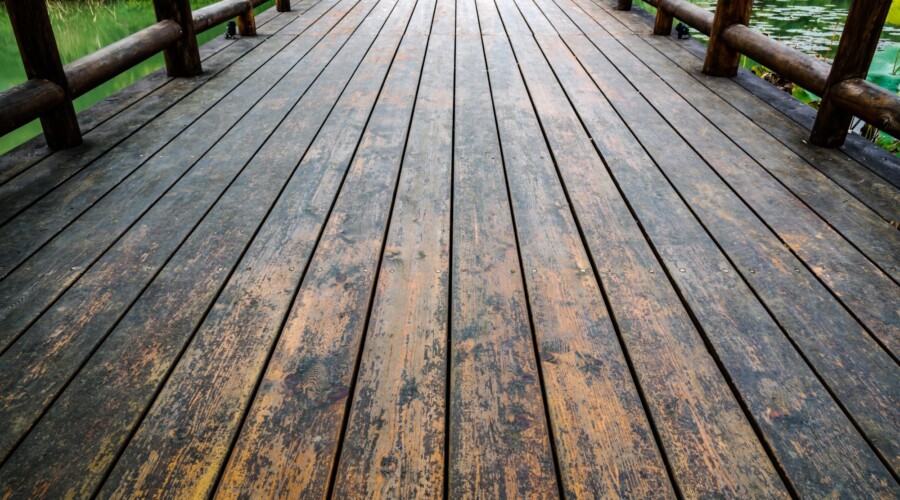
Understanding Building Codes for Residential Decks in Raleigh NC
Building a deck in Raleigh, NC, involves following specific rules, but it doesn’t have to be confusing. This guide breaks down the permit process, key building codes, and inspections to help you stay on track.
Homeowners will discover how to avoid delays and extra costs by understanding what to include in their plans and the fees involved. Whether your deck connects to your home’s roof or walls, this guide offers easy solutions for meeting local building standards.
What are the Permit Requirements?

In Raleigh, North Carolina, securing a permit is a critical step before starting any deck construction project. Contrary to some common beliefs, permits are required for ALL accessory structures in Raleigh, regardless of size, due to changes made to the UDO by the city council in 2020. The city’s regulations stipulate that a permit is mandatory for decks that exceed a certain height or size. This ensures that all structures are safe for use and comply with local building codes.
When applying for a permit, homeowners must submit detailed plans that include the deck’s dimensions, materials, and height above ground level. These plans must be sealed if they don’t come directly from the residential code prescriptive tables for members/spans/sizes. They also must be reviewed to ensure they meet North Carolina’s safety standards, particularly concerning weight capacity and stability against water and weather-related stresses.
The permit process also involves an inspection of the construction site. Inspectors assess factors such as the proximity to property lines and the impact on water drainage. For properties in Historic Districts or designated as Raleigh Historic Landmarks, a Certificate of Appropriateness from the Raleigh Historic Development Commission (RHDC) is required before submitting the permit application. Compliance with these regulations is essential to prevent any future legal or environmental issues:
To build a new deck or porch in Raleigh, NC, you’ll need to submit the following:
- Permit Application: Complete the form through the Wake County Permit Portal.
- Site Plan: Include all required details. Note: A certified survey done by a land surveyor is required.
- Building Plans: Meet the specifications outlined in the Building Plan Requirements. All plans must be designed to meet the 2018 North Carolina Residential Code Appendix M
- Insurance Proof: Provide a workers’ compensation certificate or an exemption form.
- Owner Affidavit: Submit a notarized form if the project costs $40,000+ and you’re the general contractor.
For properties with septic systems, ensure the deck location doesn’t affect the system or violate setback rules. A site visit and consultation fee may be required.
Finally, it is important to note that any electrical work or additions, such as a ceiling fan or outdoor lighting, may require additional permits. Homeowners should consult with local authorities to ensure all aspects of their deck construction are authorized and up to code.
What Should Be Included in Your Plans?

When drafting plans for a residential deck in Raleigh, NC, adherence to the local building code is paramount. The following documents serve as a blueprint for safe and compliant construction, reflecting a deep understanding of structural requirements.
Site Plan
A site plan for a residential deck in Raleigh, NC, must meticulously outline the deck’s footprint about the home and property boundaries. It should indicate the precise location of the deck floor relative to the house, ensuring that there is a clear understanding of how the deck integrates with the existing structure. This plan is crucial for verifying that the deck does not intrude on any setbacks and adheres to local zoning laws.
Site Plan Requirements for Deck or Porch Construction
| Requirement | Details |
|---|---|
| Preliminary Site Plan | Needed before permits are issued. A recent mortgage or refinance survey can be a helpful resource. |
| Final (As-Built) Site Plan | May be required before issuing a Certificate of Occupancy. Must be completed by a Professional Land Surveyor. |
| Lot Information | Show lot lines with dimensions, road frontage, and the entire lot drawn to scale. |
| Buildings and Structures | Include all existing and proposed buildings with dimensions and distances from property lines or fixed points. |
| Driveways and Other Features | Show existing/proposed driveways, parking spaces, patios, walkways, and pool decking with material types and widths. |
| Utilities | Indicate well, septic, sewer, and water easements. Show wastewater system details if applicable. |
| Water Features | Include ditches, easements, buffers, flood hazard areas, and stormwater structures. |
| Impervious Surfaces | List all impervious surfaces in square feet and as a percentage of the lot size. |
| Parcel Information | Include the parcel ID number (PIN), property address, north arrow, bar scale, and date of preparation. |
| Drawing Scale | – Lots < 5 acres: Use scales like 1″ = 20’, 30’, 40’, 50’, 60’, or 100’ on paper no larger than 11″ x 17″.- Lots ≥ 5 acres: Acceptable scales are 1” = 100’, 200’, 300’, 400’, or 500’. Large-scale maps require an inset with a smaller scale. |
Note: These are minimum requirements. Smaller lots or special circumstances may require additional details.
The plan should also detail the dimensions and spacing of support joists, the type of wood used for construction, and the placement of stairs and handrails. A well-documented site plan helps simplify the permit approval process and serves as a guide during construction to maintain code compliance.
Building Plan
The building plan for a residential deck in Raleigh, NC, must address the integration of utilities such as electricity and plumbing, ensuring that any installations comply with safety standards. For instance, electrical wiring for outdoor lighting or power outlets must be properly insulated and placed to avoid heat sources or water exposure. This careful planning prevents hazards and ensures that features like air conditioning units or windows are not obstructed, maintaining the functionality and comfort of the living space.
Deck Plan Requirements Checklist
| Requirement | Details |
|---|---|
| Code Compliance | Follow the 2018 North Carolina Residential Code Appendix M for decks, including porch support. |
| Drawing Type | Provide a top-view deck plan (looking down). Elevation plans are optional but encouraged. |
| Dimensions | Include outside dimensions, spans between support posts, and footings. |
| Deck Height | Specify the tallest height of the deck floor from the finished grade. |
| Footing Details | Show sizes, depths (minimum 12” into the soil), and locations of all footings. |
| Post Sizes | Indicate the sizes of all support posts. |
| Girder Details | Include girder sizes, the number of members, and spans between supports. |
| Floor Joists | Show direction, size, spacing (on-center), and spans of all floor joists. |
| Joist Attachment | List 2×2 ledgers or joist hangers used for attaching floor joists to girders or bands. |
| Guardrails | Provide details for guardrails (required if deck floor is 30”+ above grade). Minimum height: 36”. |
| Bracing | Show bracing details for free-standing decks or decks with floors 4’+ above grade. |
| Deck-to-House Connection | Include details of how the deck will attach to the house band. |
| Cantilever | Show cantilevers and their spans from the support. |
| Special Requirements | Engineer-stamped plans are needed for two-story decks or decks supporting hot tubs/spas. |
Note: Plans can be hand-drawn but must be neat and legible. This checklist is a guide to avoid compliance issues, delays, or additional costs. Permit holders are responsible for meeting all code requirements.
Professionals in the field utilize their expertise to craft plans that optimize the interplay between the deck structure and existing home features, providing homeowners with a seamless and practical addition to their property.
What Building Codes Must Be Followed?

Residential deck construction in Raleigh, NC, must follow specific building codes to ensure safety and durability. These codes cover ventilation, material use, and structural design. For example, decks near crawl spaces or attics need proper ductwork for ventilation.
All decks must have footings that extend at least 12 inches into the soil, and engineer-stamped plans are required for two-story decks and decks supporting hot tubs and spas
Stair treads must meet exact size standards for stability and accident prevention. Open sides of stairs with a total rise of more than 30 inches above the floor must have guardrails at least 34 inches in height measured vertically from the nosing of the treads. Additionally, all parts of the deck, from the foundation to its attachment to the house, must meet local load-bearing and structural rules to handle Raleigh’s weather.
What Inspections Are Required?
In Raleigh, NC, deck construction requires several inspections to ensure it meets building codes. The first inspection checks the deck’s framing to make sure the dimensions and structure match the approved plans. This step confirms that the foundation and support systems are properly installed and can handle the expected load.
Next, authorities inspect safety features to ensure they are placed and functioning correctly, meeting the city’s safety standards. Their inspection is primarily around the footings and the foundations. This protects residents from potential hazards related to outdoor decks.
The installation of lighting and glazing elements is also inspected. Inspectors verify that outdoor lighting fixtures are securely mounted and that any glass in the deck area, like in doors or windows, uses the right safety glazing. These measures help prevent accidents and improve deck safety.
Final inspections validate the completion of the deck according to the permitted plans and codes:
- Confirmation of framing stability and dimension accuracy
- Verification of smoke detector installation and functionality
- Assessment of lighting fixtures and safety glazing materials
- Overall inspection of the deck’s structural integrity and code adherence
Special Considerations

When constructing residential decks, homeowners must consider special factors. These considerations involve understanding the placement of decks concerning septic tank and field lines, and ensuring that the footings do not compromise the system’s integrity. For historic properties, any addition, including decks, must preserve the area’s heritage. Infill compatibility requires that new constructions, such as decks with hot tubs, electrical wiring, or plumbing fixtures, blend seamlessly with existing neighborhood structures, respecting established patterns and scales.
Septic Systems
An inspection is necessary to ensure that the deck’s footings do not interfere with the septic tank or field lines, which could lead to costly repairs and sanitation issues. Before any deck construction can begin on properties with septic systems, approval from Wake County Environmental Services is mandatory. This is particularly important when the deck is adjacent to a room with plumbing, such as a basement or a bathroom with a toilet, where septic system functionality is crucial.
During the deck-building process, it is important to maintain a safe distance from the septic system to prevent contamination or damage. The site plan must clearly show the location of all wastewater system components including tanks, treatment systems, distribution devices, supply lines, and primary and repair drain lines. The fence contractor must verify that the construction does not impede access to the septic system for future inspections or maintenance. This foresight protects the homeowner from potential disruptions and aligns with Raleigh’s health and safety regulations.
Historic Properties
Adding modern features like decks to historic properties requires careful planning to maintain the property’s original look. Properties in Historic Districts or designated as Raleigh Historic Landmarks must obtain a Certificate of Appropriateness from the Raleigh Historic Development Commission (RHDC) before any permit applications can be submitted. For example, adding a deck to a home with a historic masonry fireplace needs special attention to materials and design so the new deck fits with the existing style. The goal is to improve outdoor living spaces with modern comforts, like a place for morning coffee or an evening shower, without changing the home’s historic charm.
Raleigh’s building codes require that the addition does not affect the property’s historical value. Contractors must follow these rules carefully, often finding creative ways to add safety features while keeping the historic appearance intact. This ensures the new deck is functional and respects the community’s heritage.
Infill Compatibility
Deck design for infill development requires careful attention to detail and a solid understanding of local building codes. All deck construction must comply with the 2018 North Carolina Residential Code Appendix M, which requires footings to extend at least 12 inches into the soil. Materials like safety glass in railings and the proper placement of screws in construction play a key role in ensuring the deck blends well with its surroundings. For safety, guardrails (36″ tall) are required for any deck floors more than 30″ above grade. Effective drainage solutions are also necessary to prevent water buildup that could impact both the deck and nearby properties.
For homeowners in Raleigh’s urban or densely populated areas, the challenge is designing a deck that fits with the existing architectural style. Engineer-stamped plans are required for two-story decks and decks supporting hot tubs and spas. This involves considering how the deck looks and incorporating features like elevators for multi-level decks or privacy screens, all while maintaining the area’s overall aesthetic. The following table illustrates key considerations for infill compatibility in deck construction:
| Feature | Consideration | Impact |
|---|---|---|
| Screws and Fasteners | Use of non-corrosive, color-matched screws | Ensures durability and visual appeal |
| Glass Elements | Inclusion of safety glass in railings | Enhances safety without compromising design |
| Elevators | Integration in multi-level decks | Provides accessibility while maintaining style |
| Drainage Systems | Effective water management | Prevents damage to property and surrounding areas |
| Overall Design | Harmonious with neighborhood structures | Preserves community character and property value |
Ultimately, the goal is to erect a deck that not only meets the homeowner’s needs but also contributes positively to the neighborhood’s charm and value. By focusing on thoughtful design and adherence to Raleigh’s building codes, one can ensure that their deck addition is both functional and harmonious with the local urban landscape.
How Do You Submit Plans?

To submit plans for a residential deck in Raleigh, NC, homeowners must ensure their design meets local zoning ordinances and building codes. This includes requirements for siding, concrete work, and foundation specifications to ensure the deck’s safety and durability. Plans should include a top view looking down, though elevation deck plans are optional but encouraged. Hand-drawn plans are acceptable if neat and legible.
The plans must be submitted through the Wake County Permit Portal and include:
- **Detailed dimensions including outside measurements and spans between support posts and footings
- Height of deck floor from finished grade
- Footing sizes with width, depth, and locations
- Post sizes
- Girder sizes and spans between supports
- Floor joist specifications
- Guardrail details
- Bracing details for applicable structures
The review process is thorough and aimed at ensuring construction meets the highest safety standards.
Deck plan documentation should include detailed drawings and material specifications, such as the type of concrete for footings or siding materials. These details are essential for approval, demonstrating the deck’s structural integrity and adherence to Raleigh’s building codes.
Once approved, homeowners can proceed with construction, but any design changes must be resubmitted for review to ensure the deck’s stability and safety, which aligns with Raleigh’s commitment to quality construction.
What Are the Fees?

The fee structure for deck permits in Raleigh is straightforward:
Residential deck permits cost $75 plus $0.25 per square foot of gross floor area. This fee includes all trades and temporary electrical construction poles if needed. Additional fees may apply in specific situations:
- **Re-inspection fee: $60 per extra trip needed to approve an inspection
- Permit amendment fee: $60 if the project scope changes or revised plans are submitted*
Homeowners should also expect fees related to corrosion prevention for outdoor structures. Using plastic materials or special coatings to protect against weather conditions may lead to additional regulatory assessments, affecting the permit cost.
If a deck design involves proximity to or removal of a tree, extra fees may apply for environmental assessments and potential arborist consultations to ensure the tree’s health or address safety concerns.
Residents should budget for all associated costs, including those required to meet building codes that prevent water damage to wooden structures or deterioration of plastic components. These regulations are in place to ensure long-term safety and durability for residential decks in Raleigh.
Need a Deck Building Expert for your Project? Look no further than AAA Fence and Deck!
Whether you prefer the classic charm of wood or the hassle-free convenience of composite deck, we’ve got the ideal solution to match your style, budget, and vision.
Our skilled professionals are ready to guide you every step of the way—from choosing the right material to bringing your dream deck to life. Start enjoying your upgraded outdoor oasis sooner than you think. Contact AAA Fence and Deck today for your free, customized quote!
Frequently Asked Questions
What specific plans are required for deck construction approval?
Deck construction approval typically requires a detailed plan that includes the design layout, dimensions, materials, and compliance with local building codes.
Which building codes apply to residential decks in Raleigh?
In Raleigh, residential decks must adhere to the North Carolina Residential Code, which includes guidelines on structural integrity, railing height, and spacing requirements.
Are inspections mandatory for deck building in Raleigh?
In Raleigh, deck construction requires a permit, and inspections are a mandatory part of the process to ensure safety and code compliance.
How much does it cost to obtain a deck building permit in Raleigh?
The cost for a deck building permit in Raleigh varies, typically ranging from $50 to $200, depending on the project's scope and size.
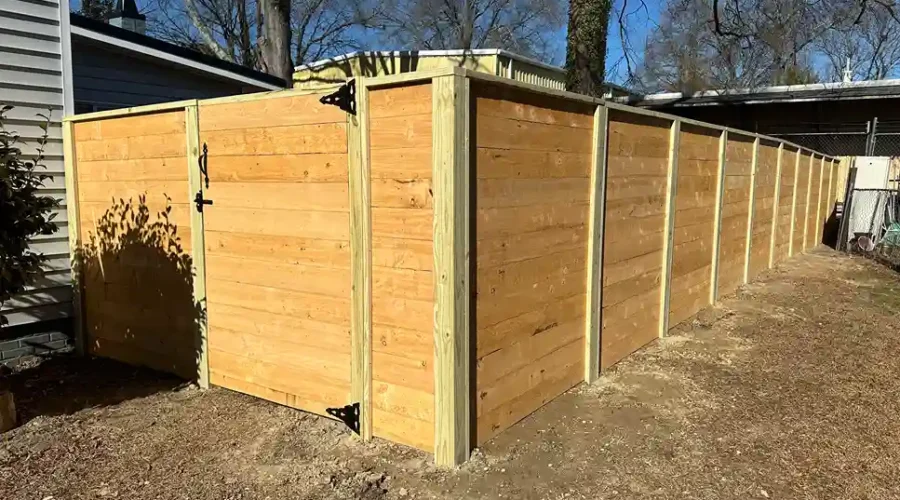
How to build a fence in 9 easy steps – A DIY Guide
Building a fence can increase privacy, establish limits on the grounds of the property, and enhance the property’s aesthetic appeal. Constructing a fence via a DIY approach allows you to design a custom barrier that suits your home and saves you the money associated with hiring a contractor. An appropriate fence contributes to security, as intended, but can also increase the property’s value.
This comprehensive guide will provide step-by-step details regarding the planning and construction of fences for homeowners and DIY enthusiasts who enjoy physical work. It requires using essential tools like a post-hole digger, level, hammer, and materials like fence posts, pickets, and concrete. Adopting the right methodology, taking accurate measurements, and carefully assembling pieces of the structure help craft a neat, functional, and durable end product.
9-Step Guide to Building Your Fence
Step 1: Plan Your Fence Layout
Deciding the fence project design and layout is critical for the project’s success. A well-thought-out plan and design ensure minimal error and help achieve functional and aesthetic goals.
- Determine the Purpose: Decide whether the fence will serve the purposes of privacy, boundary, or simply for decoration. A good example is that a privacy screen restricts unwanted attention while a decorative fence enhances the curb appeal.
- Check Local Regulations: Verify the zoning, local building codes, and homeowner’s association regulations for restrictions on the height and placement of the fence you want to design. Failing to comply with local codes dictated by the American Planning Association results in penalties or the removal of the fence.
- Select Fence Type: Wood, vinyl, and chain link are common fence types. Consider using cedar wood, which is very durable and can last up to 40 years with proper care and maintenance.
- Sketch and Mark the Layout: Draw a plan of the envisioned work on graph paper or a suitable computer program. Mark the critical sections, such as the location of the gate with spray paint and measure the perimeter using batter boards. Calculate the linear length of the fence by measuring the perimeter. If pre-assembled panels are to be used, divide the total footage of the fencing by the size of the panels, for instance, 6” or 8” panels. For a picket fence, determine picket spacing and the estimated number of pickets. Example:
- Linear footage: 120 feet x 12= 1,440 inches.
- Capacity of Picket: 5-inch width of picket and 3-inch gap = 8 inches.
- Pickets required = 1440/8 = 180 Pickets.
- Poles needed = Total length/post spacing of 6-8 foot sections plus two for end posts.
Step 2: Measure and Mark the Fence Line
Precise measurements guarantee that the fence will be perfectly straight, follow the property’s border, and blend well with the overall design. The International Association of Certified Home Inspectors states that when fences are erected, alignment and spacing of the frame are essential to prevent sagging and weakness within the structure.
- Use Measuring Tape: Calculate the distance that should be fenced using measuring tape. Stand corner poles and join them with string to make a workable outline.
- Square the Corners: Use the 3-4-5 method to confirm right angles:
- Take 3 feet off a wooden string from the corner and measure.
- Take 4 feet off the other line that is perpendicular to the first.
- Move the lines until the distance between the two points is exactly 5 feet.
- Mark Post Locations: Highlight the post positions along the property line with spray paint. For stability, stability, the posts should be evenly spaced 6-8 feet apart from each other
Step 3: Gather Necessary Tools and Materials
Having the right tools and materials during fence installation is essential to complete the work smoothly without interruption or delay. It also helps construct a sturdy and durable fence while avoiding potential injuries during the project.
- Tools: Post-hole digger, batter boards, level, hammer, saw, drill, measuring tape.
- Materials: Fence posts, rails, pickets, concrete, screws, nails
- Safety Equipment: Gloves, safety glasses, and ear protection.
Step 4: Dig Holes for the Fence Post
Digging the holes for your fence posts is key to building a reliable and durable fence. The right post hole depth and spacing are the building blocks for stability.
- Determine Hole Depth: Each hole should be ⅓ of the post’s height. For example, a 6-foot post needs a 2-foot hole. It firmly secures the post in the ground and eliminates any chances of leaning or drooping.
- Use a Post-Hole Digger or Auger: A post-hole digger or a two-man auger can speed up any task involving stiff or rocky soils. Augers are generally rented as they can help immensely, especially when undertaking large tasks.
- Check Alignment: After digging the hole, use a string line to verify the straightness of the dug holes. The distance between each hole should be 6-8 feet apart, depending on the size of the fence panels.
Step 5: Set Fence Posts in Concrete
Installing fence posts in cement or concrete is important in constructing a stable and durable fence. Concrete provides the necessary support to hold the posts straight and intact for a reasonable period.
- Mix Concrete: Mix the concrete per the manufacturer’s instructions. Next, pour 3-4 inches of gravel concrete into the bottom half of each hole around the post, leaving a few inches of space at the top.
- Position the Post: Insert the post in the hole, ensuring it is plumb and leveled. Use the spirit level to check for proper alignment and make adjustments. For support, use 2×4 boards and stakes to hold the post in position until the cement dries.
- Let the Concrete Cure: The concrete must be set for 24 to 48 hours before attaching fence rails or panels. This allows for a thorough setting of the cement adhesive, thus reducing the risk of movement.
Step 6: Attach Rails or Panels to Posts
For any fence installation, attaching rails is a crucial step in maintaining the overall integrity of the fence. Use No. 8 1-1/2-inch deck screws or galvanized nails, and fasten them to the fence pickets with the help of a spacer block to maintain the gaps. Depending on the width of the pickets, 2 or 3 fasteners per rail can be used for maximum strength of the painted fencing.
- Attach Rails: Use screws or nails to fix the top and bottom rails to the posts so that they are at the same level. If needed, include a middle rail for better support.
- Check Alignment: Use a level to confirm if each rail is positioned correctly, leveled horizontally, and spaced equally from one another. Adjust accordingly to ensure consistency in visual presentation.
Step 7: Install Fence Panels or Pickets
Fixing the fence panels or pickets is the stage where the primary components of your fence come together, giving the fence its purpose and form.
- Choose Installation Type: Decide on using prefabricated panels for quick installation, or choose a more art-styled design using wooden pickets, allowing precise adjustments.
- Attach Securely: Connect panels or pickets to the rails with rust-resistant, usually galvanized screws and nails to ensure the integrity of the structure. Do not let any two pickets touch, ensuring reasonable spaces between them for ventilation and visual symmetry.
Step 8: Add Post Caps
Adding post caps aesthetically improves your fence and helps protect against water damage, thus increasing the longevity of your fence posts.
- Choose Cap Material: Materials include wood, metal, or vinyl caps. Each material gives its visual appeal and endurance, with vinyl being light on maintenance while metals are suitable for withstanding weather extremities.
- Attach Securely: Fit each cap appropriately and securely using glue, nuts, bolts, or a rubber mallet for a polished finish. If necessary, use galvanized finish nails to add stability to the caps.
Step 9: Stain or Paint the Fence
Applying a protective coat, particularly a stain or paint, minimizes the chances of damage inflicted on the fence by extreme weather conditions while improving its appearance.
- Prepare the Surface: Scrub the fence’s surface with soap and water for sanitation purposes and allow it to dry for some time. Remove dirt and debris before applying the protective layer.
- Apply Stain or Paint: Depending on your preference, use a paintbrush, roller, or sprayer to paint over the fence with an oil-based stain or paint. This layer prevents moisture, UV light, and weathering.
Tips for Success and Maintenance
Proper maintenance enhances the efficiency, aesthetics, and lifespan of the fence. Regular checkups, cleaning, and repairs can help avoid problems that would otherwise require costly rectifications and improve the fence’s maintenance.
Regular Inspection and Repairs
You should conduct a fence inspection at least twice yearly to avert problems. Check on the fence for any broken boards or nails that are bent or broken, as well as damaged pickets, especially after storms. Loose fasteners can be tightened with a screwdriver or hammer. Bent fasteners can be replaced using screws or galvanized screws to prevent more rusting. Damaged pickets should be changed as soon as possible using deck screws which will ensure the fence remains sturdy, resilient, and attractive for the long term.
Cleaning and Re-staining
It is crucial to clean and re-stain a fence to maintain its strength and aesthetics. To remove stubborn dirt stains such as dirt, mold, and mildew, use a pressure washer with a power of 1500-2000 PSI or a garden hose with some cleaning detergent. Ensure that the entire surface of the fence has been dried for at least 24-48 hours to prevent any possible water retention after finishing the work, which could contribute to other risks.
Re-staining every 2 to 3 years helps mitigate moisture, UV rays, and weathering effects. Brush, roller, or spray oil-based stain, making sure all sides, edges, and especially the picket tops are fully coated for maximum protection.
Dealing with Common Issues
Addressing common issues will help enhance the fence’s longevity and effectiveness. Early detection and resolution of such problems help minimize extensive fence repair work and ensure the enclosure’s structural integrity.
- Sagging Rails: Horizontal rails can sag due to bad weather, which expands the wood or even provides inadequate support. This can adversely impact the entire fence structure. The remedy brace or add supports to the rail and then firmly attach it to the posts using brackets.
- Leaning Posts: Alterations in the cold or wet seasons may also cause the fence posts to tilt, threatening the integrity of the entire fence. Re-dig around the post and straighten it, add gravel for drainage, and refill it with cement while keeping the post vertical.
- Gaps between Pickets: When pickets shrink or warp, little spaces can be left, which impacts privacy and spoils the look of the fence. The affected fences must be replaced with new ones, or the distances between them must be filled with a block to achieve proper spacing.
- Fence Alignment Issues: Ground movement or improper installation methods may cause the misalignment of fence panels or posts, affecting the fence’s use and appearance. Adjusting fasteners, re-leveling the displaced panels, and reinforcing the posts can restore the fence’s correct shape.
Looking to enhance your outdoor space with a stunning new fence? AAA Fence and Deck has you covered!
Whether you’re after the timeless elegance of wood, the durability of vinyl, or the sleek functionality of metal, we offer fencing solutions tailored to your needs, budget, and style.
Our expert team is here to help you design the perfect fence to add privacy, security, and curb appeal to your property. Don’t wait—contact AAA Fence and Deck today for a free, personalized quote and take the first step toward transforming your outdoor space!
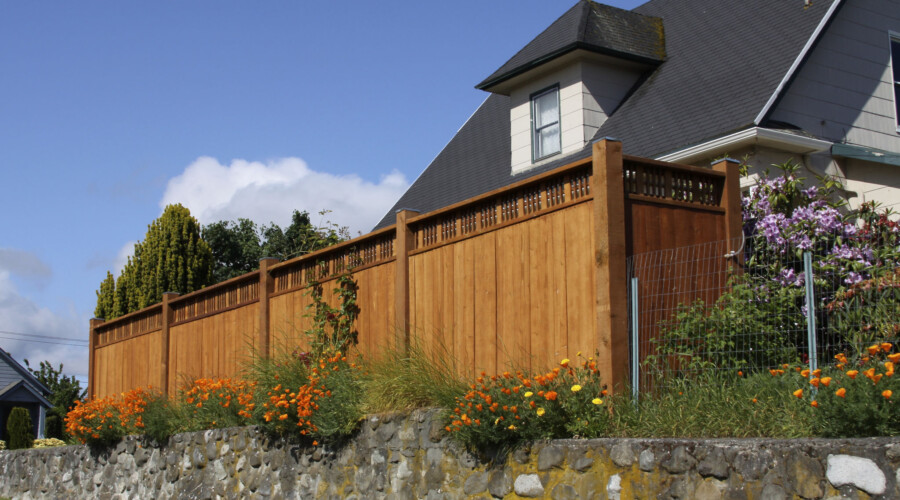
Types Of Security Fencing: Essential Solutions
Security fencing is essential for every household, business, or commercial area, contributing to safety, privacy, and access control. Security fences vary from enclosing one’s yard to protecting and securing business premises. Security fences are fitted with perimeter fences for enclosure and access control fencing to regulate entrance, satisfying security and aesthetics needs. Some barriers emphasize the visual entity, improving the turning points of the property to merge security within beauty in areas where aesthetic appeal is necessary.
Each security fence system has characteristics like wear and tear resistance, height, and anti-climb elements that help prevent unauthorized access while marking property lines. With lifetime use, these fences ensure protection throughout with minimal upkeep. For homeowners and small-scale businesses, a wide range of versatile options are available depending on the level of security required, making security fencing a practical and cost-effective solution across diverse applications.
What is a Security Fence?
A security fence is a protective structure that safeguards property boundaries, restricts unauthorized access, and improves the security of specific locations. Apart from being a physical factor, the security fence serves psychological purposes since it clearly defines limits that assist the property owner in managing access to the property and its resources. Examples include a tall physical barrier that can be insulated around business establishments or an anti-climb fence for places requiring additional security.
Compared to other fence types, security fences are made more with emphasis on aspects like height, strength, and other peculiar features like anti-climb and limited visibility options. Such attributes render security fences extremely useful in protecting sensitive zones by elevating deterrence and persisting when faced with different threats, serving many different purposes from residential properties to borders of business perimeters.
Key Benefits of Security Fencing
There are numerous advantages of installing security fencing for property owners, such as adding an extra layer of protection and increasing property value. Here are five such benefits that are noteworthy:
- Deterring Intruders
The primary purpose of security fencing is to keep the surrounding area safe from intruders, creating external and internal barriers to stop any unauthorized penetration. Vandalism and trespassing are prevented where anti-climb devices and security mesh panels on layered security fences restrict an intruder’s entrance. This benefit is crucial for commercial sectors and establishments with more sensitive zones.
- Improved Privacy
Fencing for security purposes enhances discretion for residential and commercial environments by restricting external views. Residential or commercial, these fences allow for a secured and private space, perfect for shielding one’s activities or businesses from unwanted attention.
- Increased Safety
Security fences are integral to limiting access to dangerous areas, including swimming pools, playgrounds, factories, and ongoing buildings. This helps maintain safety by preventing the access of uncontrolled individuals, especially small kids or untrained workers, to risky zones. Thus, security fencing provides both protection and averts accidents.
- Lower Insurance Costs
The construction of a security barrier can result in lower insurance policy charges. Usually, insurance companies see the inclusion of security fencing as an additional risk alleviation aspect that lowers the risks of theft, vandalism, and liability claims. This advantage may help reduce costs over a long period, so installing security fencing becomes a cost-effective strategy for homeowners and business operators.
- Cost-Effective Security
Whereas other security systems, such as alarms or cameras, will have monthly subscriptions, security fencing is a one-off capital investment. With high-quality materials and little maintenance, security fences do not have hidden costs for protection. This economical strategy ensures effective safety and control for relatively low management costs, making it suitable for a small area or large commercial places.
Types of Security Fencing by Material
Security fences are built using different materials and offer specific benefits, making it easy to select a barrier suitable for security, durability, and aesthetic considerations associated with any property. The five most widely used security fences, according to material, include the following:
Chain Link Security Fences
Chain link fences are a popular and economical security-enhancing option. Their open design allows for sight but keeps unauthorized individuals away. Such corrosion-resistant fences are widely adopted in industries and commercial or public places because of their high durability and low maintenance characteristics.
- Security Features:
- Galvanized or Vinyl Coating: Fences are coated with galvanized or vinyl finishes, which resist weather elements and minimize rust.
- Anti-climb additions: Adding barbed or razor wire increases security and deters climbing.
- Best Applications:
- Best suited for perimeter security in parking lots, playgrounds, schools, and construction sites.
High Security Ornamental Fence
Ornamental fences combine beauty with security and are constructed using first-rate materials such as wrought iron and aluminum. This type of fence is often preferred in commercial properties, residential areas, and institutional settings.
- Security Features:
- Reinforced Design: Include spiked tops, anti-climb panels, and heavy-duty construction for a robust barrier against unauthorized access attempts.
- Powder-coated Finishes: Its weather resistance attribute makes it a long-lasting option. The multi-color option enables you to customize the fence to your liking.
- Best Applications:
- Front entrances, government buildings, and high-end residential areas.
Wooden Security Fencing
Wood fences are a classic option primarily used in residential spaces. They form a natural solid barrier limiting outside visibility, which enhances privacy. They must be painted, sealed, or stained to safeguard the enclosure from weather, rot, and insect damage.
- Security Features:
- Height and Privacy: Can be as tall as 6-8 feet and come in enclosed styles like stockade and board-on-board, creating a solid fence that prevents unwanted visibility.
- Best Applications:
- Residential properties, private backyards, and high-privacy areas.
Vinyl and Composite Security Fences
Vinyl and composite fences are sturdy and resilient alternatives that need minimal upkeep. Homeowners prefer this option as it offers functionality and enhances curb appeal. The weather-resistant characteristics make them a favorite for residential and commercial properties needing long-lasting security.
- Security Features:
- Weather Resistance: Rot, insect, and UV damage resistance help maintain aesthetic appeal and
- Solid Panel Designs: Provide solid panels that create a strong barrier, blocking unwanted visibility and access. They are ideal for maintaining privacy and reducing noise.
- Best Applications:
- Residential backyards, pools, and commercial spaces.
Security Wire Fences
Security wire fences provide a strong deterrent against unauthorized access. They are an effective perimeter security option widely used in high-risk areas. This fence type must be inspected periodically to ensure it is rust-free.
- Security Features:
- High Deterrent Value: Include barbed and razor wire that intimidates intruders and makes bypassing dangerous.
- Flexible Configuration: Can be used as an add-on for chain-link fences or independently to add an extra security layer.
- Best Applications:
- Military bases, warehouses, prisons, agricultural lands, and industrial perimeters.
Types of Security Fencing by Application
From home to business, expansive spaces, and even short-term barriers, security fencing can be designed to fit the characteristics of a particular environment. In terms of security fencing classification, there are four basic types according to their application:
Residential Security Fencing
Security fencing protects the safety and security of houses while enhancing property value. Options include wooden privacy fences for backyards, vinyl and composite fences for easy maintenance and durability, and ornamental metals for elegant but strong security. Add gates with locks and height variances for protection around pools, playgrounds, and other entryways.
Commercial Security Fencing
Commercial security fencing keeps businesses safe using access control and theft prevention. Some options include chain-link with barbed wire, high-security ornamental fences, and security wire fencing. Advanced features like keypads, extensive CCTV networks, and security lights help enhance protection within secured areas such as storage and exclusive sections.
Perimeter Security Fencing
Security perimeter fencing is critical in protecting the edges of large properties and is commonly installed on industrial, agricultural, or public buildings. Such fences define property boundaries and prevent wrongful entry to the premises by non-entry personnel encroaching on permitted areas.
Temporary Security Fencing
Temporary security fencing ensures security in active settings like construction works, outdoor events, and areas that are undergoing renovations. It is made of lightweight materials, making it easy to set up and provide a barricade against access and encroachment in given areas. It is appropriate in transient situations.
Regulations and Permits for Security Fencing
For the installation of security fencing, you need to fulfill three fundamental aspects: zoning laws, local building codes, and Homeowner Association (HOA) guidelines. All these regulatory aspects ensure that your security fence project aligns with neighborhood standards, safety needs, and community aesthetics.
Zoning and Property Line Requirements
Zoning regulations specify the placement, height, and proximity of fences to property boundaries within neighborhoods to protect citizens’ aesthetics, security, and accessibility. These regulations help reduce property disputes and promote order within neighborhoods unless public facilities are suppressed in the circulation or space of private neighbors.
Local Building Codes and Compliance
Local building codes stipulate minimum material strength, structural stability, and methods of installation to guarantee that fences built are safe and long-lasting. These regulations help mitigate accidents and injuries that come with weak, flimsy, insubstantial, and poorly made constructions with recommended materials and firmly putting up structures for proper and lasting security.
HOA Guidelines for Residential Security Fencing
In neighborhoods with Homeowner Associations (HOAs), particular regulations determine a fence’s appearance, material, and placement. These restrictions ensure the fence serves its purpose while conforming to the entire community’s design. Following HOA recommendations helps prevent unnecessary disputes with the HOA and helps preserve good relations with other residents by observing communal aesthetic values.
Choosing the Right Security Fencing Solution for Your Property
For your property’s safety, AAA Fence and Deck, a trusted local fence contractor in Raleigh, provides tailored security fencing solutions that ensure protection and peace of mind. AAA Fence and Deck offers an optimal mix of strength, durability, and decorative value for personalized fencing solutions for residential, commercial, and industrial construction. Our all-weather fencing will provide highly effective and aesthetically appealing protective structures that will last long and ensure the place’s safety. Contact us now to begin protecting your premises with the high-quality solutions our clients depend on and recommend.
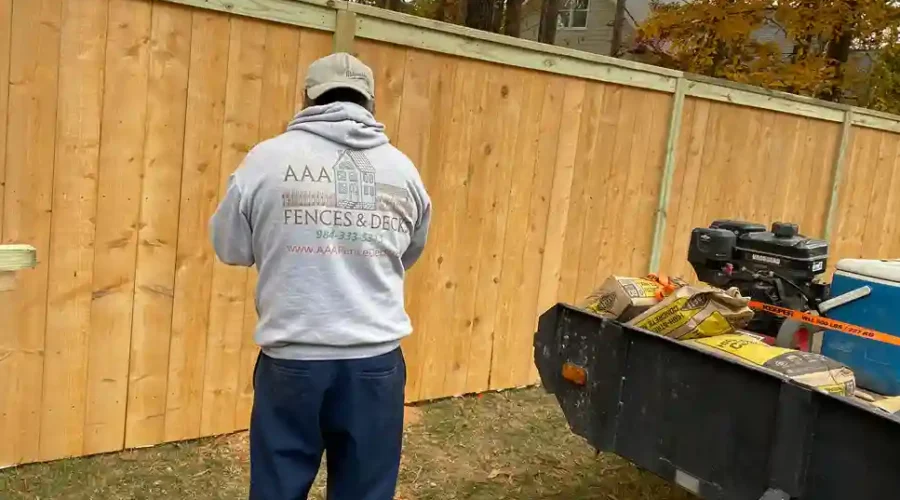
How to Choose the Right Fence Contractor for Your Project?
The most appropriate fence contractor should have the right equipment, use the best materials, demonstrate the best workmanship, and provide high-quality fences that last long. The fencing contractor you choose should guarantee reliability and excellent customer service, a transparent process, and a portfolio of past works and success stories relevant to the field. The next contractor you employ should have licensed and insured professionals possessing several years of experience to ensure the highest standards of professionalism and reliability are observed while completing the work.
Whether it is a wooden, vinyl, or chain-link fence, a worthy contractor is needed to avoid costly errors and frequent fence repairs. The right fencing project should build an attractive, strong, and waterproof structure that will not be affected by weather or time.
Below are the things that you should consider while hiring a fence contractor for your next project:
Researching Contractors in Your Area
Searching for a fence contractor within your locality requires researching local fencing service providers through online resources and local referrals. This helps you to identify a capable and trustworthy fence builder who can provide peace of mind and deliver a high-quality fence.
Finding Local Contractors
You can search for a trusted fence installer who knows their craft by using these methods:
- Online directories: Better Business Bureau (BBB), HomeAdvisor, Agni, and such platforms help search for a licensed and bonded fence contractor in your area. These online directories include ratings and reviews, which assist in making an informed decision.
- Referrals from friends or neighbors: Word-of-mouth from friends or neighbors can provide trusted insights. Asking someone who has recently built a fence about their experience can help you determine whether the contractor they hired is good.
- Social media recommendations: Local Facebook groups, marketplaces, and apps like Nextdoor can help you find a reliable fence contractor. You can review feedback and photos of past projects and evaluate multiple contractors.
Checking Online Ratings and Reviews
Starting with Google Reviews to get an idea about the contractor’s reliability and quality helps you determine their professionalism and punctuality. Check out the comments and ratings to learn about their customer service and the quality of their work.
You can also visit Yelp, Agni, and other sites to get detailed insight into the fence contractor. Feel free to read multiple reviews and check the photos to confirm whether the fence builder is qualified and reliable.
Key Qualifications to Look For
When looking for a fence contractor, a qualification check helps ensure that the project will be effective, risk-free, and high-quality. Here are a few characteristics that differentiate a good contractor from the rest:
Licensing and Insurance
- Valid State or Local License: The availability of a valid license indicates that the contractor has fulfilled all the necessary conditions and requirements to work in your region. It is a simple yet significant marker of trust and responsibility.
- Liability and Worker’s Compensation Insurance: Liability insurance addresses externalities that cover property damage, whereas worker’s compensation insurance protects you if employees sustain injuries while working on the project.
Experience with Fencing
For any quality fence installation, the extensive experience of contractors matters most. Seasoned contractors have skills and traits that offer assurance to deal with challenges and deliver lasting results.
Material knowledge is also an essential factor to consider when choosing a fencing contractor. Contractors who work with wood, aluminum, vinyl, or chain link know which materials best suit these needs regarding quality, looks, and maintenance, making the fence project stand the test of time.
Certifications and Associations
- Certification from Industry Organizations: These are formal documents awarded to a contractor to prove that he has undergone a particular training or fulfilled certain industry standards. Such certificates are usually associated with higher expertise and devotion to quality standards.
- Membership in Professional Associations: Belonging to professional organizations like the American Fence Association (AFA) is a good idea. The organizations have codes of ethics and quality that members must comply with, further reassuring the contractor’s professionalism.
Reviewing the Contractor’s Portfolio
A contractor’s portfolio is their art, skill, and achievement in action. An in-depth examination of this can indicate the chances of their meeting the specific design and quality demands that one has. Here’s the right way to evaluate a fencing contractor’s portfolio to be sure you’ve made an informed choice.
Requesting Examples of Past Work
Request illustrations of finished works that resemble what you have in mind for the premises. By reviewing their past works, one can analyze the design creativity, workmanship, and consistency in quality. Find projects that reflect the materials and architectural style you like—this will prove the ability of the contractor to materialize your idea.
Site Visits (If Possible)
If possible, visit a recent project site to observe the contractor’s work. You can also assess the durability and installation quality of the fences they have built. A properly installed fence will be straight and taut, with well-fitted posts and a well-constructed unit that has endured the weather since it was put up.
Client Testimonials and References
Client reviews and word of mouth are valuable since they reflect the contractor’s trustworthiness and the quality of work provided. Contact former customers and inquire about their experiences regarding communication, project deadlines, and satisfaction with the result. The presence of such recommendations assures that the contractor is a quality-oriented person.
Getting and Comparing Quotes
While estimating the fence installation cost, comparing prices and quotations from different contractors is essential for budgetary control. This procedure can also let you know the cost breakdowns and time frames of various activities, which will be necessary for planning your budget and comfort.
Requesting Multiple Quotes
Asking for a quote from multiple fencing contractors makes analyzing the prices and services offered easier. Be sure that each quote includes the prices of the materials, labor expenses, and additional services provided, like modifications or post-project cleaning. After this, you will receive reasonable price ranges, the extremes will be identified, and a contractor who can work comfortably within these prices will be found.
Understanding Cost Factors
Several aspects, like the material cost and customization needs, impact cost. For example, wood fences are generally cheaper, but making them with a plastic or metal frame is relatively expensive due to enhanced durability. These will also include the overall area of the boundary and the added structural works like arches or fences. Understanding these issues will enable one to compare the costs that different contractors quote without any unfairness and how each cost is spent.
Payment Terms and Options
Different contractors have different payment terms, so checking their deposit and financing options is advisable. Sometimes, a contractor may ask for an advance of a certain proportion of the total contract price to set the work in motion or provide other more favorable terms. Understanding when the payments are due and which kinds of payments can be made helps in budgeting, reducing the chances of going overboard, and finding a good contractor with a flexible price policy.
Discussing Project Timeline
A well-established project timeframe promotes efficient project execution and management of concerns. Information about the work, its expected completion time, and the impact of seasonal influences in the environment can assist you in completing your fence project within the required schedule.
Estimated Duration
There is a specific timeline for every design of the fence. For example, installing wooden fences usually takes 1 to 3 days. However, for vinyl or chain link boards, the installation may take between 2 to 4 days since the assembly is more complicated. Custom-made designs or open plans with curves might push the timelines even further. Knowing the estimates helps plan the project timeline accordingly.
Scheduling and Seasonal Considerations
Fencing and other outdoor work are done more frequently in the spring and summer, making the timelines tighter with increased waiting time. The winter months are good since they are not busy, but hindrances such as ground freezing or extreme climatic conditions may cause delays in work. Having seasonal considerations concerning the commencement and completion of the work helps manage expectations when talking to your contractor.
Reviewing the Contract Details
A detailed agreement is instrumental in safeguarding the interests of both the client and the contractor. Understanding every detail of the contract, from the summary to the warranty section, helps one know what to expect.
Key Contract Elements
Important contract provisions that should be checked include the description and schedule of the work. Also, look at the payment terms and conditions, such as deposits, payment holidays, or final payment conditions. A comprehensive contract minimizes the possibilities of misunderstandings and disputes regarding the undertaking as each party proposes and agrees on the provisions of the contract.
Warranty and Aftercare
Reputable contractors provide labor and material warranty in case complications arise after the completion of the work. This guarantee is available for Raleigh deck repair or adjustments that may be needed if the materials are defective or the standard of workmanship delivered is unsatisfactory. Providing warranty terms and options for aftercare services helps alleviate fears, reassuring you in the long run.
Assessing Communication and Service
When hiring a contractor, it is essential to note their ability to communicate with the customer. Evaluating their response and accessibility of service delivery throughout the whole process eases the evaluation of their degree of cooperation.
Responsiveness
A responsive contractor answers all phone calls and corresponds professionally with you regarding your emails and other communication forms. Slow or no response in interactions could be red flags of possible hitches during the project. Professional courtesy should be exercised in all communication since it will dictate how any issues will be addressed during the project.
Availability During and After Project
Choose a contractor who values communication during and after the fence project. At every stage, there should be a person who gives feedback and answers questions, keeping the client updated. Also, confirm that they will be available for post-project assistance, either for fixes or curious inquiries, as this shows how much they value their customer base.
Identifying Red Flags
Spotting the warning signs at the project’s beginning will prevent you from hiring unreliable fence contractors. Look for such warning signs in quoted prices, contracts, and the contractor himself.
Quote and Contract Concerns
Beware of ambiguous provisions/contract terms and improbable low-price offers. Therefore, the contracts should specify the type of fence materials to be used, the time frames set, and the scope of work. A low price may suggest timeliness issues or the exclusion of some costs. A good contractor has an excellent way of outlining a clear and detailed contract regardless of the project size.
Behavioral Warnings
It is a major red flag if a contractor cannot give you the references or has no insurance or licensing. Reliable contractors are okay with sharing such information because they understand its importance and can always get people who will vouch for them.
Making Your Final Choice
After considering the quotes, portfolios, and timelines in detail, the moment to make the final decision comes. Reflecting on the collected data enables you to opt for a trustworthy fence builder who understands your project’s requirements and stays within the budget for the work.
Reviewing Collected Information
Consider everything you have compiled: quotes, portfolio, timeline, and communication quality. Analyze how the various contractors’ offerings matched your needs, whether in price, materials, or smooth implementation of the project.
Confirming and Finalizing the Contract
After picking the contractor of your choice, sign a contract stating all the terms you may have agreed to, including the scope, payment, timeline, and guarantees. A well-defined contract should state the parties’ expectations in the fencing project, thereby improving the chances of successful completion.
Why Hiring the Right Fence Contractor Matters?
Hiring the right fence contractor allows you to carry out a risk-free installation that will stand the test of time and add value to the property. A competent contractor guarantees exceptional and long-lasting work and ensures that surprise costs do not arise after the completion of the fencing. Choosing wisely gets you a contractor who will meet the industry standards and deliver quality work. Conversely, a poor choice may result in problems with supplies, timeframes, and work that won’t last long.
Here’s why selecting a skilled professional matters:
- Ensures High-Quality, Durable Results
- Reduces Risk of Costly Repairs and Maintenance
- Prevents Use of Substandard Materials
- Minimizes Project Delays and Budget Overruns
Make the Right Choice for Your Next Fence Project
Selecting the right fence contractor for your next fence project will help you get a resilient and attractive enclosure that increases your property’s value. If you hire the right person, expect quality craft, punctuality, and everything smooth from beginning to end. Remember to review credentials, look for referrals, and assess the candidates’ prices and methods to ensure that the contractor fits you. For trusted and reliable fence installation service, AAA Fence and Deck offer years of expertise for every project, from residential and commercial fencing to custom fence designs. With customer satisfaction at the core of our objectives, our dedicated crew is here to help you achieve your fencing expectations with minimum stress and guarantee results that enhance and endure with time.
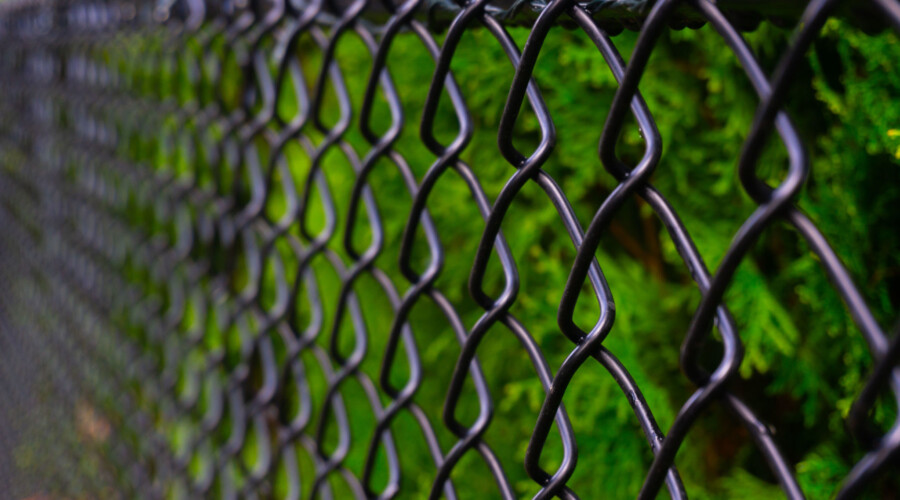
Step-by-Step Guide to Chain Link Fence Installation
Chain link fence, also referred to as a Cyclone fence, is a strong, durable barrier system made from galvanized or coated steel. This cost-effective fence, fabricated from steel wires, is constructed in a cross-section diamond pattern. Such fences are supported by metal and concrete trench walls along the length of the fence with the additional aid of top rails, tension, and tie wires. They are easily installed in residential and commercial properties, providing visibility and durability with low maintenance, making them a popular choice for homeowners, property managers, and real estate agents.
To install a chain link fence properly, reviewing the local building codes to obtain the required permits for regulatory compliance becomes the foremost necessity. Taking accurate measurements and marking the area that is to be fenced off are the first steps in planning the layout of the fence. Avoid conflicts over the boundary lines, existing underground cables, and other utilities. One of the measures used in this case is fixing the posts in concrete for stability and attaching the chain link fabric to provide a neat and resilient enclosure. With proper planning and execution, it is possible to get a fence that is not only secure but also able to withstand wear and tear over time for different uses.
Below is a clear and well-defined step-by-step guide that outlines the overall process of chain link fence installation, making it accessible for DIY enthusiasts and handypersons seeking a reliable, long-term fencing solution.
How to Install a Chain Link Fence?
Permits and Approvals for Installation
- Residential Permit:
Chain link fence installation on residential property should be preceded by permit verification. Most permits are required for fences exceeding 6 feet and above or in certain zoning districts. Start by inquiring with your local zoning office if a permit is needed for your project.
To obtain a residential permit, fill out the application form, pay the application fee, and attach certain documents, including property maps indicating where the fence will be erected. Local zoning laws may further limit the height, fence materials, and construction place, especially in front yards or corner lots, for safety and visibility reasons. After the fence is installed, some areas will require an inspection of the fenced area to ascertain that the building is within the approved proposed dimensions.
- Commercial Permit:
For safety and regulatory reasons, all commercial properties require a permit for development regardless of the height of the structure. Commercial permits address zoning and safety issues, including the minimum height of fences, the materials used for fencing, and precautions taken against intrusion. The process involves providing an elaborate site plan, adhering to setback provisions, and paying inspection fees.
After the installation of commercial fences, they are subjected to inspection to ensure they meet the prescribed code and safety standards. This ensures that the installed fence meets the local standards regarding providing safe and sufficient boundaries, which is crucial for protecting the property and the public.
Preparing for Installation
- Determine Fence Layout and Measurements:
- Set the fence back from the property boundary by 4 inches or as per local codes.
- Call utility companies to mark any underground lines before digging to avoid mishaps.
- Use the 3-4-5 method for squaring corners: a distance of 3 feet on one line and 4 feet on the other, and adjust the angle so that the diagonal is 5 feet.
- Choosing the Right Tools and Materials:
- Essential tools and items include a post-hole digger, level, pipe cutter, and come-along (stretcher).
- Materials for chain link fencing include galvanized chain link fabric, line post caps to keep water out, top rail sleeves, tension bands, tension wire, and tie wires for support.
- Ideal for pet owners, landscape designers, and farmers looking for long-lasting fencing options.
Setting Fence Posts
- Digging and Positioning Fence Post Holes:
- Dig holes for line posts about 4 – 6 inches deep. Meanwhile, the corner end and post hole depth should be at least 6-8 inches deep. This helps add extra reinforcement to the fence.
- Between posts, leave a gap of 3¾ inches for chain link fabric and tension wires.
- At the base of each hole, at least a 4-inch gravel layer is required. Use a hand tamper or 4×4 timber and compress the soil for better drainage.
- Securing Fence Posts with Concrete:
- Ensure the right concrete mix is used and encase corner and gate posts with a minimum of 6 inches of concrete mix around them.
- After inserting the posts in their respective holes, ensure they are upright using a level, and leave for 24 to 48 hours to set.
Attaching and Securing the Fence Fabric
- Attaching Fence Fabric:
- The chain link fabric is rolled out and aligned along the fence puller adjacent to the posts.
- Tension bands are wrapped around the corner posts, and a tension bar is placed and pushed to the end of the fabric to secure it.
- For longer fences, the fabric strips must overlap one diamond width and be secured to each other to prevent any alterations.
- Stretching and Securing the Fabric:
- Evenly run out the fence fabric around the tension stretchers along the length of the fence, using the fit come-along to ensure even tension is maintained.
- Tie every pole every 12 inches with fabric to help retain the fabric’s straight form and ensure it is held nicely in place at all times.
- The top rail is fitted into the upper section of the fabric, which is connected to all the posts with appropriate rail ends and top rail sleeves for proper support.
Adding Gates and Finishing Touches
- Attaching and Aligning the Gate:
- Position the hinges on the gate frame and the gate post and adjust the height and alignment to suitable positions.
- Ensure the gate moves in and out without complication and is level in operation. Adjust hinges and add braces if extra support is required.
- Final Inspection and Adjustments:
- Secure all four screws to the corner posts, rail ends, and tension band.
- Make sure that the door latch goes in. It should also swing out without the latch blocking it and without interference with any other surfaces.
- Ensure there are no sharp-edged or protruding fittings, and tight down any loose bolts to prevent complications later.
Maintenance Tips for Longevity
- Cleaning and Inspecting the Fence:
- From time to time, the fence should be cleaned with pure water and detergent to eliminate dirt and prevent rusty corrosion.
- Every system component, including post caps, rail ends, gate fixtures, and their respective wear corners, must be checked for wear and tear.
- Tightening and Replacing Worn Components:
- Inspect and fix any damaged or loose wires, tension bands, rail connectors, and other essential areas as needed.
- To prevent the fence from being unsafe and unstable, replace any broken or worn-out parts usually found on the corners, gates, or other areas with high stress.
Looking for Chain Link Fence Installation in Raleigh, NC
For high-quality chain link fence installation in Raleigh, NC, AAA Fence and Deck is the most reliable option. We are well-versed in Raleigh’s building codes and guarantee that every fence will conform to the regulations, meaning that fence setup is done efficiently and securely. Our fences’ performance surpasses Raleigh’s local climate. We only use the best fence materials, allowing homeowners, landlords, and real estate agents to enjoy a strength-enhancing and aesthetics-improving permanent fence.
Selecting AAA Fence and Deck caters to an easy, pleasant, and professional journey from the beginning to the end. From the initial consultation to the last step of the work, everything is handled by our trusted local fence contractor, including taking measurements, erecting poles, stretching the chain link, and ensuring it is taut enough. With our attention to detail and quality service, you will enjoy a dependable and trustful fence installation from AAA Fence and Deck for years to come.
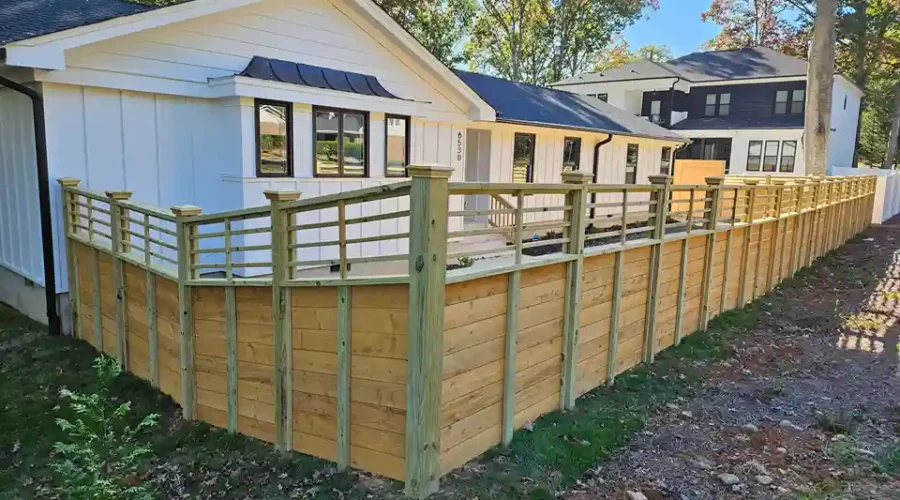
6 Benefits of Hiring a Professional Fence Contractor
A professionally installed fence marks the property boundary and represents safety and design functionalities, enhancing the property’s value and visual aspects. With this high-end investment, whether for domestic purposes or business, it is essential to hire a professional fence contractor who will ensure every post and panel is installed accurately. A professionally installed fence guarantees that your fence installation will be done with care and precision without falling into the most common DIY mistakes and achieve a high-quality and durable outcome.
There are 6 reasons why hiring a fencing contractor is the best approach for every fence project:
- Expertise and Experience
- Time and Cost Efficiency
- Quality Materials and Workmanship
- Proper Permits and Code Compliance
- Customization and Design Options
- Warranty and Maintenance
- Expertise and Experience
A professional fence contractor will have the necessary skills to perform a perfect installation process, avoiding the usual errors of DIY projects. Their skills include working with various fence materials like vinyl, wood, and aluminum, which help them deal with several challenges. By assessing the surroundings, including the ground, temperature, and climatic conditions, they ensure that your fence is installed firmly and will endure the test of time. Such skill levels will ensure that the fence installation is carried out properly without needing correction, providing peace of mind for homeowners.
- Time and Cost Efficiency
Employing a qualified fencing specialist is cost- and time-efficient. They know the procedures involved in the installation and finish the work on time, resulting in a short completion time compared to DIY efforts. They avoid costly mistakes and have the right tools and techniques to do the work properly, ensuring the fence is fixed right the first time. Apart from reducing labor expenses, such an approach also averts costly reconstructions later on, which makes it a cost-effective choice.
- Quality Materials and Workmanship
One of the fundamental benefits of hiring a qualified contractor is access to high-quality materials that are usually inaccessible to the public. They are equipped with the best fencing materials for the job, whether solid timber, sturdy plastic slats, or even chain-link. Together with their expert workmanship, these materials build a weatherproof fence of high-quality standards that can last for years without getting ruined. They construct a visually appealing, sturdy fence that can endure the elements and daily use.
- Proper Permits and Code Compliance
Permits, building restrictions, and other fence construction regulations can be a hassle. Professional contractors take care of all the paperwork and installation permits in the entity. This keeps the property from any possible legal claims resulting from faulty fence construction. Ensuring compliance with the codes at the very beginning prevents instances where you will be fined or forced to adjust the fence after it has been installed, and this guarantees that the work will proceed without trouble.
- Customization and Design Options
A professional fencing contractor allows for creative design features, ensuring that the built fence serves its functional purpose and enhances your property’s look. Be it extra ornamental features to value the house at the front or intruder prevention, professional help can alter the blueprint to one’s liking. Their ability to blend functional structures while maintaining a certain sense of beauty ensures you get a solution to the problem while enhancing the aesthetic appeal of your house.
- Warranty and Maintenance
Workmanship warranty is one of the primary advantages of hiring a professional contractor. Most guarantee both the materials and installation, which means you will be protected if there are any problems after the fence is installed. Besides, they offer regular maintenance services to ensure the fence is always in good shape. This means that your fence will withstand the test of time, as with routine maintenance and professional care, the barrier will remain sturdy, beautiful, and functional.
How to Choose the Right Professional Fence Contractor?
Choosing the right professional fence contractor will help determine the quality, strength, and even the design of your fence projects. Below are five points that you can consider:
- Licensing and Insurance:
Hiring a licensed and insured contractor ensures that the project conforms to the laws and regulations of the area, protecting against possible lawsuits or claims that may arise. The contractor’s license verifies professional competence, and insurance protects you against all risk exposure and loss during fence repair work. Checking for licensing and insurance promotes comfort since the person providing services is competent and ensures all is well within the project.
- Previous Project Portfolios:
A contractor’s portfolio details their experience and the standard of their work. Reviewing their previous works will help you understand their different approaches to handling materials, clarifying whether this contractor fits your style. This assessment guarantees that the contractor can construct the precise type of fence you have in mind.
- Credentials and Reviews:
While certifications maintain a contractor’s level, reviews provide practical evidence of their reliability and efficiency. Positive reviews reflect good work ethics, time management, and quality work. It is recommended that evaluations and testimonies be sought from contractors to determine not only whether the contractor is a professional but also whether they are a person that past clients would recommend.
- Quotes and Services:
It is essential to request a comprehensive written quotation so that you can appreciate the full extent of your project. This is primarily a detailed specification of supply, work, and guarantees that allows for proper assessment of different contractors and minimizes chances of loss through contractor overpricing. A well-defined scope of work prevents confusion and helps manage the project from start to finish without any conflicts.
- Timeline and Process:
Defining a schedule for dates and timelines is crucial to complete your project as scheduled. A contractor worthy of a professional’s engagement will explain the details, including obtaining the required licenses to facilitate the installation. Therefore, it is crucial to raise the timetable issues at the beginning so the project sails smoothly and avoids delays in the execution.
Get Professional Fence Installation with AAA Fence and Deck
When building a fence, it is recommended to seek the services of an experienced fencing contractor who will guarantee quality workmanship that will last many years, adding property value and enhancing aesthetic appeal. At AAA Fence and Deck, we focus on providing quality work with the right skills in a pre-determined timeframe for every job. We offer robust, beautiful, and long-lasting fences for every project, utilizing the best materials and methods. Our professionally installed fences meet your fence vision and provide a resilient fence that complements your landscape.

Low-Maintenance Fence Solutions: Simple Tips for Fences That Last
What is a Low-Maintenance Fence?
A low-maintenance fence is a fencing option, specifically vinyl, aluminum, or pressure-treated wood, that requires minimal upkeep but still delivers top-notch security, privacy, and curb appeal. Made from durable materials like high-strength steel, these fences resist weather, pests, and rot and require less maintenance, making them a popular option among homeowners looking for long-lasting, hassle-free solutions.
For homeowners, property managers, and real estate investors, low-maintenance fences provide cost-effective solutions that withstand wear and tear and are easy to maintain. Fencing materials like vinyl and aluminum are rot-free and naturally resistant to rust and pests, so they can last longer than non-treated wood fences. While the upfront installation cost is more expensive, it saves you money in long-term maintenance and fence repair. Only basic maintenance practices like cleaning these structures with water and mild soap occasionally are required to maintain their attractive state, enabling homeowners to have beautiful and fitting boundaries with very low input.
Why Fence Maintenance is Important?
Fence maintenance is important to extend the longevity of fences while preventing safety hazards. It also helps retain its aesthetic appeal and safeguard your fence investment. Below are some crucial aspects highlighting the significance of fence maintenance:
Extending Lifespan
Routine checking, cleaning, or minor repairs help vinyl or aluminum fences survive longer. These works avoid damages due to soiling, decomposition, and oxidation, which would otherwise depreciate the durability of the fence after some time. Fixing minor problems like a loosening bolt or a broken section of a fence helps to delay the emergence of more expensive issues, which also helps extend the lifespan of your fence.
Improving Curb Appeal
Keeping your fence clean and well-maintained improves the overall look of your outdoor space, enhancing its curb appeal and market value. Fences made using vinyl and aluminum only require a little maintenance effort to preserve their original look. These maintenance-free fences only require washing to get rid of dirt, fungus, or other stains to keep them attractive, enabling your house or office to stand out and enhance its value.
Identifying Safety Hazards
Lack of fence upkeep can lead to safety concerns such as loose panels, leaning posts, or broken sections. Every fence, especially decorative low-maintenance fencing solutions, is expected to be examined regularly to check how firm and safe the fence is. These kinds of problems should be resolved as soon as they are discovered to maintain the integrity of the fence and avoid injuries to the house’s children, pets, and other occupants.
Protecting Your Investment
Investing in a fence is imperative, and regular care of the fence is essential, considering the money it takes to erect one. Conducting regular maintenance, carrying inspections, making timely repairs, and coating fences with protective treatments like paint or sealant help preserve them for the long term. Timely attention to minor issues such as dulling paint or termites infesting your fence will ensure that your fence does not go off, costing you a fortune in replacement.
Types of Low-Maintenance Fences
Low-maintenance fencing Options primarily consist of materials that require minimal upkeep while providing long-lasting durability and appearance. These fences also require low maintenance, making them suitable for individuals who prefer hassle-free, long-lasting, yet convenient solutions. Below are the four main categories of low-maintenance fences:
Wood (Treated or Pressure-Treated Wood)
Treated and pressure-treated wood fences, such as redwood or cedar, are resistant to funguses and insect pests. Such treatment enhances the strength of the wood and decreases its chances of being affected by water or insects. After a few years, they require painting or staining to retain their resilience and aesthetics. Traditional wood fencing, like reed and cedar wood, can withstand rot but needs ongoing care to maintain its quality.
Vinyl
Vinyl fencing is almost maintenance-free, making it one of the most preferred options by homeowners looking for low-effort alternatives. The strength and weather resistance properties help these fences survive extreme elements without splitting, discoloring, or decaying. The only maintenance concern is general cleansing with warm water and a mild detergent from time to time to keep its freshness. Vinyl fencing is not only very strong, but it can be found in different colors and designs for practical, decorative purposes with little effort.
Aluminum
Aluminum fencing is rustproof and all-weather resistant, making it easy to maintain, especially in regions with heavy rain or high humidity. It does not need finish, stain, or varnish, as it is strong and light in weight to withstand the test of time. Because of its corrosion-resistant nature, this type of fencing is appropriate even in places where it rains heavily or experiences extreme climatic conditions. Its exciting structural designs and modern appearance, coupled with little maintenance requirements, make aluminum fencing quite attractive and favorable.
Chain Link
Constructed of heavy steel wires, chain link fences are affordable and durable. They hardly require repairs since they are often coated or galvanized to avoid corrosion. Even though chain link fences offer less obscurity in comparison to other fence types, their practicality due to low maintenance requirements and extensive life, makes them an ideal option for both homes and business properties. Such fences are especially suitable for enclosing large areas at a minimal cost because of their sturdiness and minimal upkeep requirements.
Simple Tips for Maintaining Fences
No matter the material your fence is made of, regular upkeep is essential to ensure its longevity and visual appeal. You can maintain the fence your self, or hire a fence company to do it for you. Simple maintenance helps your fence last for years without costly repairs. Here are key tips for effective fence maintenance:
Regular Cleaning
Regularly clean your fence to prevent surface damage and corrosion. For vinyl and aluminum, clean with water every few months to avoid buildup. Paint the wooden fences and scrub and clean them without fail so mold or mildew does not develop. Clean fences are less exposed to degrading elements, helping them last longer.
Trim Vegetation
Ensure the plants near your fence are not growing too close to the fence and the ground to avoid wetness that encourages the deterioration of wood or metal. There is a problem when the vegetation is overgrown because it puts against the fence moisture that causes corrosion. Regular trimming allows the fence to become irrespective of the damage that moisture may pose.
Annual Inspections
A yearly fence inspection is an essential aspect of fence repair and maintenance. After cleaning and trimming the grass and shrubs around the fence, look for scrapes, missing or loose nails, or rust stains. Detecting these minor problems will help you address them without incurring major repairs that could compromise the entire fence structure and its stability.
Stay Ahead of Repairs
Address minor issues like loose nails, cracks, or peeling paint yourself to keep your fence in optimal condition. Sticking to early repairs ensures that minor inconveniences do not develop into major problematic and costly repairs. For instance, fixing a loose post in time will save you the agony of repairing an entire section of the fence.
Rust Prevention
Protection against rust is fundamental for iron fences. Periodically inspect the fence for rusty areas, scrub off the rust with a wire brush, and apply rust-inhibiting primer or paint over the metal to prevent corrosion from setting in, especially in moist or humid areas.
Apply a Protective Sealant
Applying a protective sealant to a wood fence helps form a barrier that coats the surface and makes it moisture, rot, mold, and mildew resistant. Sealant is applied consistently to maintain the aesthetic beauty of the wood fence and protect it from any damaging elements that may be present for an extended period of time.
Apply Paint
A fresh coat of paint over the existing one will not only beautify the fence’s appearance but also keep it protected from related weather hazards. Protective paint finishes and regular touch-ups help avoid chipping, cracking, or weathering of these coatings, especially in extreme regions.
Seasonal Care
Adjust your maintenance routine according to the time of year. For example, in winter, clear snow buildup to prevent the wood from warping or the metal from rusting. Also, during the rainy season, make sure that wooden fences are sealed properly to avoid the effects of rot due to moisture. Making changes according to the weather helps reinforce the fence structure to the various changes in weather conditions.
Let AAA Fence and Deck Simplify Your Fence Maintenance
At AAA Fence and Deck, we acknowledge that homeowners desire attractive, long-lasting fencing with minimal maintenance. That’s why we offer several low-maintenance fencing solutions, such as plastic and aluminum, that require little maintenance and provide lasting durability. Whether it is professional installation of chain-link fence, expert repairs, or routine maintenance, our committed team works to provide you with a fence that remains sturdy and attractive with minimal maintenance. Trust us with the fencing work and enjoy a secure, well-designed, resilient fence without much stress.


- ‹ Previous
- 1
- …
- 3
- 4
- 5